


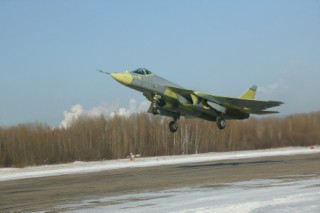
In numbers Through the lens Video
NATO reporting name: Felon
PAKFA - (Advanced Frontline Aviation Complex)
A fifth generation aircraft in service right now, is only available to the Americans (F-22 Raptor), while the Russians still develop their own.
The official Airforce code name of the project is "Advanced Frontline Aviation Complex", while the developing company, Sukhoi, prefers to call it "T-50". It's a "heavy duty" aircraft.
After many years of delay, and overcoming quite a few technical problems, the first Russian 5th generation aircraft took to the air, on January the 29th of 2010, for the first time, with test pilot Sergei Bogdan in the cockpit.
It fulfilled a 45 minute testing flight at the Komsomolsk-na-Amour air base, at the Russian Far East.
As usual the purpose of the first flight, was to raw test the major flight systems and in general the ability of the machine to comply with the main objectives of the design. The flight was described as successful, in a laconic announcement from the developing firm.
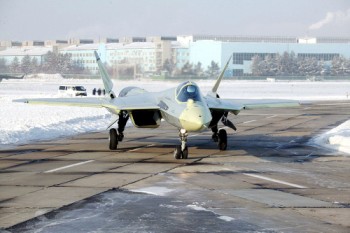 |
| PAKFA's maiden flight on January 29, 2010 © KNAAPO |
Developing chronicle of the PAK FA program:
1998: The HQ of the Russian Armed Air Forces shows interest for the development of a stealth 5th generation aircraft LFI/LFS (today PAK FA).
1999: Sukhoi officially takes on to develop a 5th generation aircraft, naming the project Τ-50.
2000: The project changes code name and is now baptized Intermediate Front Line Fighter', which is actually PAK FA.
2001: VVS (Russian Air Force) defines the technical specifications for the PAK FA program.
2002: Sukhoi wins the competition for the development of PAK FA.
2003: Presentation of the PAK FA early designs to the VVS.
2004: Sukhoi seeks a partner in developing the aircraft and comes to terms with the Indian Air Force.
2005: Sukhoi continues development of PAK FA, while its engine AL-41F (izd.117A, izd.117S), is also being developed.
2006: Tests in TsAGI aerodynamic tunnel are concluded.
2007: Construction of the first PAK FA prototype commences.
2008: High rank officials announce that during the PAK FA program development, there are two versions being designed, one heavy duty craft by Sukhoi and one lighter version by MiG.
2008: The ΝΑPΟ aircraft manufacturing plant refuses to construct the PAK FA, reporting that it is already overloaded with other aircrafts construction.
12.02.2009: "PAK FA will, within the year start test flights, while a naval two-seat version is being developed" according to M. Pogosian comments.
01.06.2009: First Τ-50 for static tests is delivered.
04.12.2009: PAK FA fuselage construction is completed.
24.12.2009: Runway tests at the Komsomolsk-na-Amure air base.
04.01.2010: The static tests aircraft is dyed dark gray, while the Τ-50(1) remains unpainted.
22.01.2010: The Τ-50 makes high speed runway tests with a slight elevation of the front wheel and the use of break parachute.
29.01.2010: Maiden flight of the T-50 (PAK FA) is performed.
General Description: PAK FA (T-50).

Sukhoi's new aircraft project code name is Τ-50, while according to the Russian Air Force, the aircraft will be called Ι-21 and the "construction" code will be "Izdelie 701".
The first designs of the twin engine fighter present a concept with constructive stealth considerations, mainly due to internal positioning of its weapon payload. Besides that though, the Τ-50 will be capable of conducting air superiority missions, thanks to its great maneuverability. It will also take on missions against ground and naval targets, with super-cruising capabilities.

Furthermore, it's capable of operating from semi-prepared short runways, something attested by its main landing wheels diameter. The new Russian aircraft is expected to be equipped with the latest electronic and radio-navigational systems that have already been tested on previous projects, like the MFI, the MiG 1.44 and the Su-47.
It is estimated that it will carry a number of AESA radars on the front part. Finally it will later be equipped with more powerful engines, with RAM materials, a fully digital cockpit (e-cockpit), infrared reconnaissance systems. The structure is made up to 25% from composites.
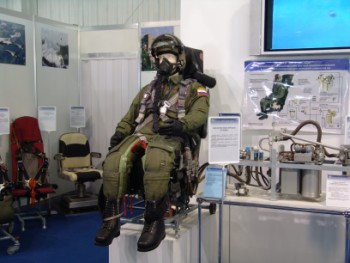 |
| Ejection seat type K-36D-5 of Zvezda company. Its special features make it one of the best ejection seat on a global scale © K. Panitsidi |
POWER PLANT:
 |
 |
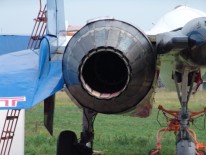 |
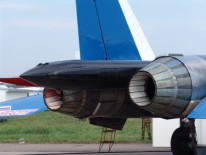
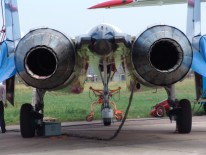
Su-27LL Flanker: The aircraft is equipped with AL-31F M1 engines, with directional thrust nozzles © K. Panitsidi.
The prototype is equipped with two 'Izdelie 117" jet engines, by Saturn (an improvement of the AL-31F Μ1 engine). This version was first presented in MAKS-2007, being tested on a specially modified Su-27LL Flanker.
ELECTRONIC EQUIPMENT:
 |
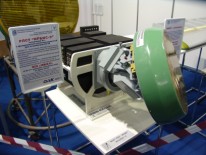 |
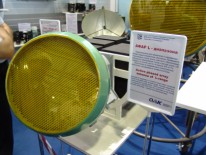
Radar IRBIS-T, modified under PAK FA (Ν050 AESA), band «Χ» MAKS-2007 © K. Panitsidi
 |
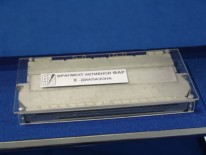 |
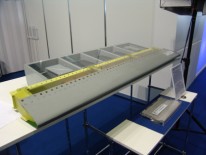
| A mock-up of the NIIP institute's "L" band radar, which will be installed on the aircraft slats wings © K. Pantisidi | AESA, fragment «X» band © K. Panitsidi |
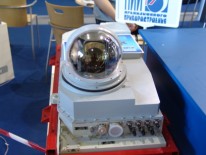 |
| The OLS electro-optical sensor is probably intended for the new generation of fighters © K. Panitsidi |
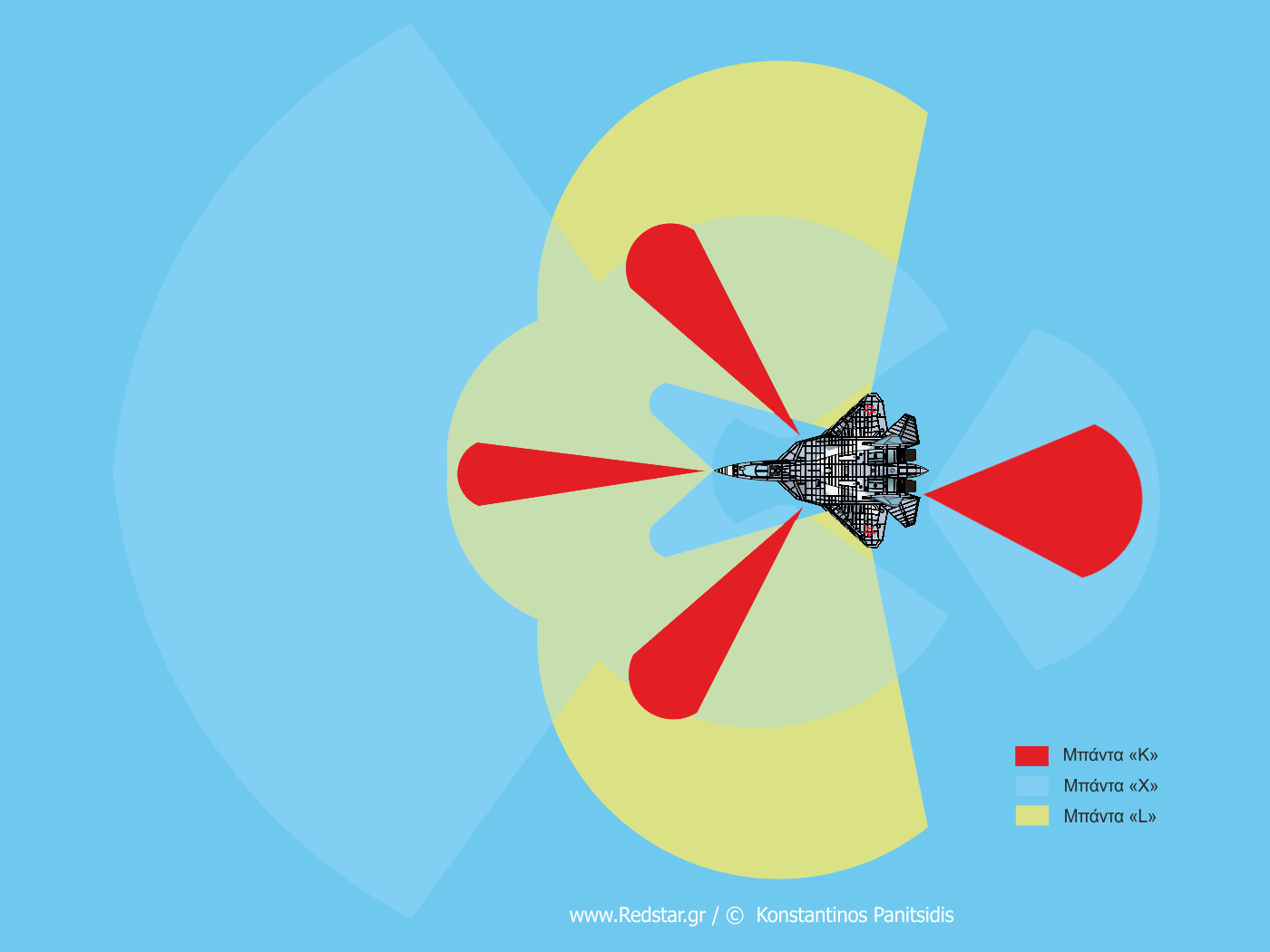 |
| Area coverage antennas © K. Panitsidi |
Interconnection and information display are provided to the pilot through two 15-inch multiple display LCD monitors, by "ΟΚΒ Elektroavtomatika" and a holographic HUD on the cockpit windshield. The Τ-50 has a fully digitized cockpit (e-cockpit).
Weaponry
The standard weapon of the aircraft will most likely be a 30 mm gun, (GSh-301) on the right side of the fuselage. The gun's firing rate is about 1500 cartridges per minute and has a 150 cartridge stock.
The main weapon of course, will be the air-to-air missiles "Izdelie 810". This missile is an improvement of the R-37 from Vympel and in theory at least, can destroy a target more than 420 klm away. It can also carry the improved medium range missile "Izdelie 180", which is an evolution of the R-77 missile. This missile has an infrared guidance sensor (IIR), while the orthogonal winglets will probably be replaced with conventional ones.
The maximum range is estimated about 150-240 klm and will be implemented within 2010. A new "all aspect" medium range version of the Κ-MD (Izdelie 300), is reported to be under development. It will be used mainly for dog fights and close range combat, and is thought to exceed in performance and technical characteristics the ASRAAM and Sidewinder-9X missiles.
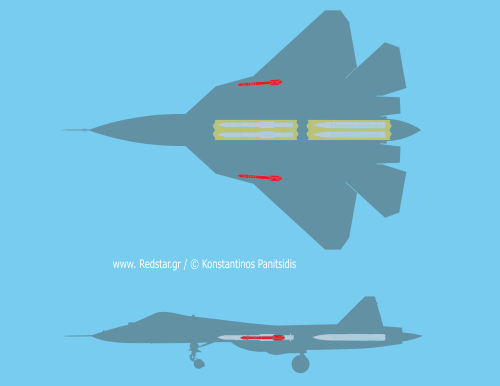 |
| ll the weapons are carried internally, in the fuselage, in two spacious weapon compartments with dimensions of 5,1m x 1,3 m. It can also carry two more missiles in special containers, of 4,1 m length, which are located at the root of the wings. It will most likely be able to carry future missiles and other weaponry (RVV-MD, RVV-SD and Kh-58 UShKE and other weapons © K. Panitsidi |
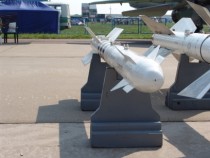
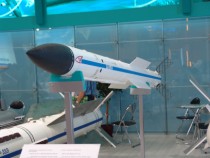
AIR-to-AIR MISSILES
 |
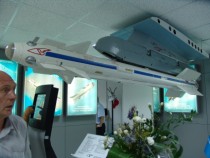 |
| R-73 (E) © K. Panitsidis | RVV-MD © K. Panitsidis |
The missile is designed to defeat air target (fighters, bombers, attack aircraft, airplane of military transport aviation) in a highly maneuverable close air combat round-the clock, from various aspects, against earth background and active enemy.
 |
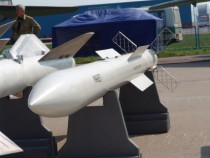 |
| RVV-AE © K. Panitsidis | RVV-SD © K. Panitsidis |
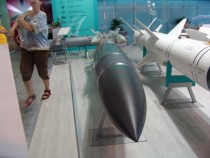
TACTICAL ANTI-SHIP MISSILE
 |
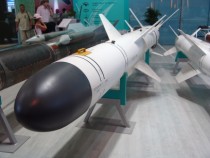 |
| Kh-31AD © K. Panitsidis | Kh-35UE © K. Panitsidis |
Designed to destroy surface war-ship with a displacement of up to 5.000 t.
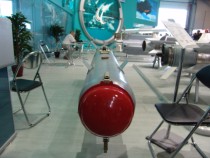
AIR GUIDED BOMBS.
 |
 |
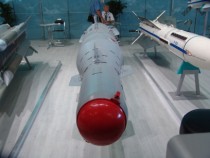 |
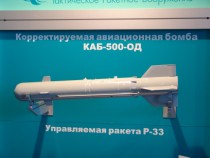
| KAB-500-OD © K. Panitsidis | KAB-500-OD © K. Panitsidis | KAB-1500Kr © K. Panitsidis |
KAB-500-OD: KAB-500S-E (KAB-500 Kr (OD))
This bomb is designed to engage ground targets such as manpower and fire emplacement defiladed in mountainous terrain.
KAB-1500Kr / KAB-1500 LG-F (OD, PR)-E: ΚKAB-1500 Kr is designed to engage stationary ground and sea surface pinpoint targets such as concrete shelters, railway and road bridges, military units, ammunition depots, railway terminals, warships and transport vessels.
PAK FA Potential weapons configurations.
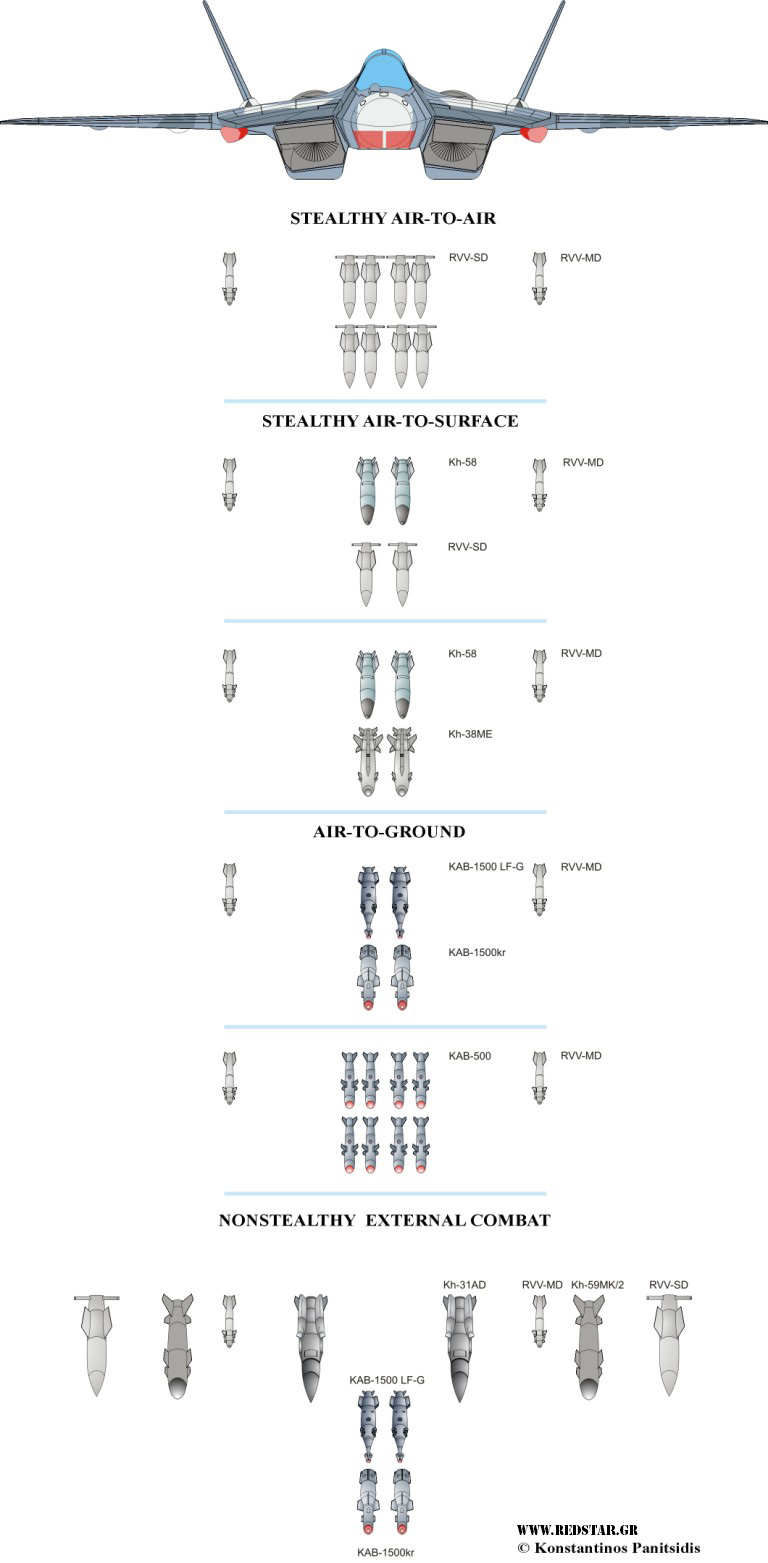
 |
 |
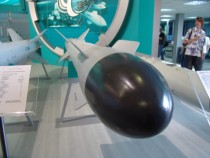 |
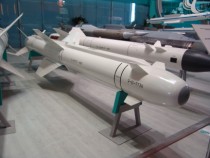
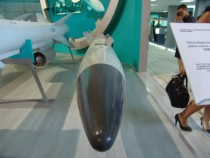
| Kh-38ME © K. Panitsidi | Kh-58UShKE © K. Panitsidi | Kh-59MK (MK2 - Increased range projectile) © K. Panitsidi |
Kh-38ME: Family of Air-Launched Short-Range Modular Missiles X-38MLE, X-38MAE, X-38MTE and X-38 MKE. Air-launched modular missiles of the Kh-38ME family are intended for hitting armored, hardened, vulnerable ground targets and groups of targets as well as surface targets in littoral areas.
Kh-58UShKE: Anti-radar missile. The X-58UShKE missile offers a unique combination of high accuracy guidance, powerful payload and small size, providing its arrangement in enlarged aircraft ammunition on external suspension points under advanced multi-purpose aircraft and inboard. The X-58UShKE missile is used to hit programmed radar targets, as well as radar targets, being expeditiously detected by the aircraft carrier target designation system
Kh-59MK (MK2): Improved-range missile. Carrier aircraft launched, designed to kill sea surface radio-contrast targets with RCS > 300m2 (ranging from boat to cruiser) day and night in simple and adverse weather in the high seas or near the coastline.
The first test squadrons are programmed to receive the first pre-production aircrafts in 2013 (two squadrons), with the regular deliveries to begin in 2015.
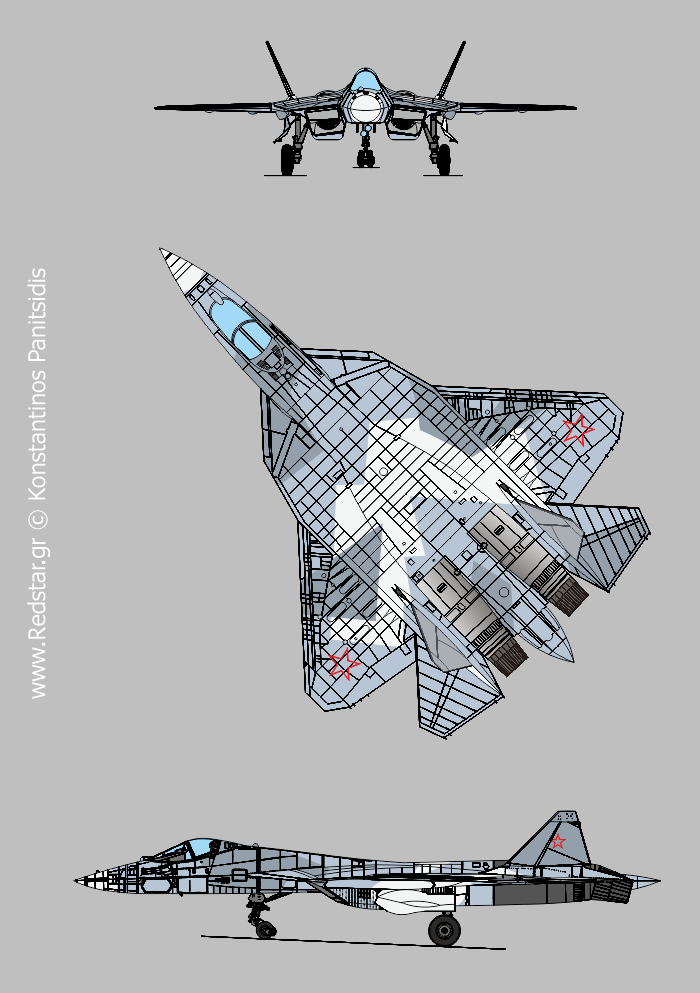
Three-view drawing
Technical specifications
| DESIGNER | OKB Sukhoi |
| COUNTRY |
Russia
|
| TYPE | Multipurpose fighter, stealth |
| CREW | 1 |
| POWER-PLANT | Two turbofan engines izdeliye 117 |
| Thrust, kgf | 2x14.500 (15.500) |
| DIMENSIONS | |
| Length, m | 20,9 |
| Height, m | 4,65 |
| Wing span, m | 14,00 |
| Wing area, m2 | 90,00 |
| WEIGHT | |
| Take-off weight (63% fuel + missiles), kg | 26.510 |
| Take-off weight (100% fuel + missiles), kg | 30.610 |
| Maximum take-off, kg | 35.480 |
| Empty aircraft, kg | 17.500 |
| Internal fuel, kg | 11.000 |
| Warload, kg | 10.000 |
| PERFORMANCE | |
| Maximum speed (at high altitude), km/h | 2.600 |
| Maximum speed in low height, km/h | 1.300 |
| Service ceiling, m | 20.000 |
| Rate of climb, m/min | - |
| Range, km | 4.300-5.500 |
| Combat range, km | - |
| Maximum overload, g | +10-11 |
| RCS, m2 | 0,005 up to 0,3 |
| ARMAMENT | One 30 mm cannon GSh-301 with 150 rounds. All weapons are carried internally in two arsenal compartments, in the fuselage. It carries two more missiles in two compartments located at the roots of the wings. |
Photos Su-57 Felon (PAKFA, T-50).


More
| PAK FA "Felon" In the race of stealth technology | .jpg "Su-57 PAK FA \"Felon\"") |
E-books
| Sukhoi, Su-57 "Felon", RuAF (Poster, Format: PDF 90x50 cm) | .jpg "Sukhoi, Su-57 “Felon”, RuAF") |