


In numbers Through the lens Photos
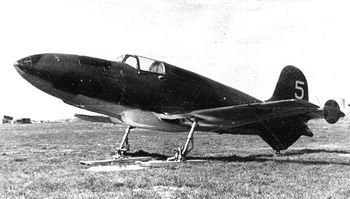
The Bi was a groundbreaking Soviet rocket-powered interceptor, developed by A. Bereznyak and A. I. Isayev. It was one of the first aircraft to use a liquid-fuel rocket engine, the D-1, which was mounted in the tail section.
During flight testing, the Bi experienced serious issues with engine stability.
On May 15, 1941, test pilot Bakhchivanzhi Grigoriy Yakovlevich, a Pontian Greek, successfully completed the first powered flight. However, during the seventh test flight on March 27, 1943, the aircraft, flying at maximum speed, suddenly transitioned from level flight into a steep vertical dive and crashed.
Bakhchivanzhi was killed in the accident. The cause was determined later: it resulted from aerodynamic phenomena associated with approaching the sound barrier, which occur at speeds of around 900 km/h when using conventional wing designs.
Following Bakhchivanzhi’s death, the program was terminated, and the remaining 30–40 aircraft were destroyed or scrapped.
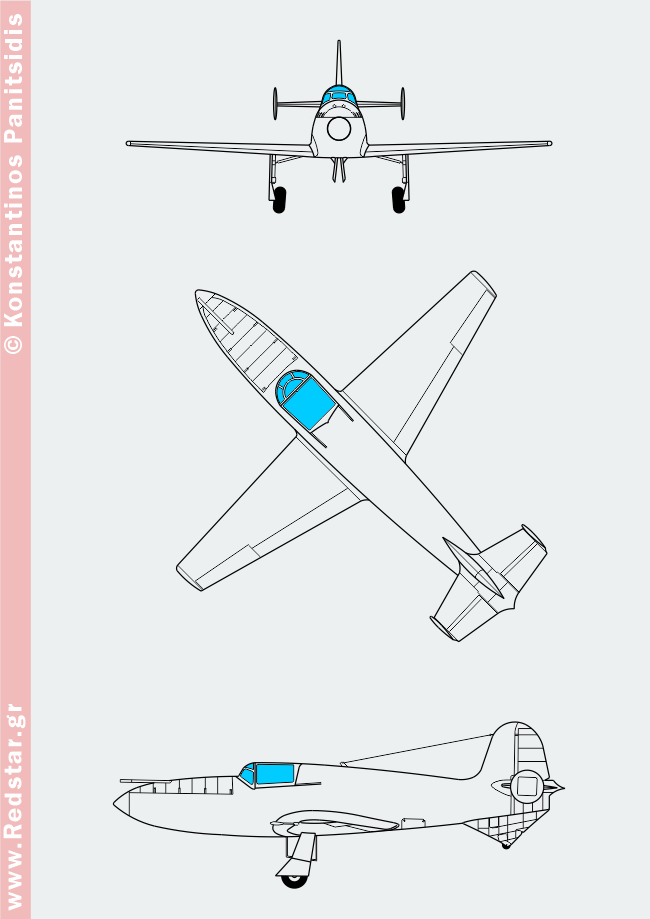
Three-view drawing
Technical specifications
| DESIGNER | Bereznyak, Isaev |
| COUNTRY | Russia |
| TYPE |
Fighter-interceptor
|
| CREW | 1 |
| POWER-PLANT | One liquid-fuel rocket engine D-1A. |
| Power, h.p. | 1x1.100 |
| DIMENSIONS | |
| Length, m | 6,40 |
| Height, m | 2,06 |
| Wing span, m | 6,48 |
| Wing area, m2 | 7,00 |
| WEIGHT | |
| Maximum take-off, kg | 1.683 |
| Normal take-off, kg | - |
| Empty aircraft, kg | 790 |
| Internal fuel, kg | - |
| Warload, kg | - |
| PERFORMANCE | |
| Maximum speed, km/h | 1.020 |
| Max speed in low height, km/h | 800 |
| Time of flight (operation of engine), min | 15 |
| Range, km | 1.800 |
| Combat range, km | - |
| Service ceiling, m | - |
| Rate of climb, m/min | 10.000 |
| Maximum overload, g | - |
| ARMAMENT | 2x20 mm cannons ShVAK. |